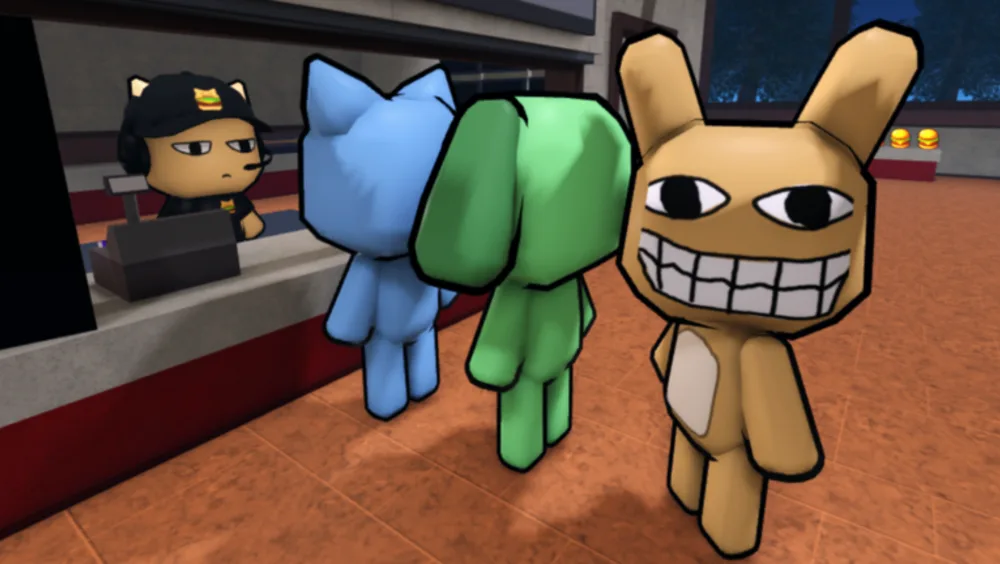
Can You Guess the Animal Roblox is one of the fastest-rising party games on the platform, 9.1 million total visits, 16,622 favourites, and over 4,500 concurrent players at peak as of late May 2026. Developed by “Guess Animal game” and last updated on 29 May 2026, the concept is deceptively simple: a mystery animal is hidden, you get partial visual clues, and your job is to identify it before your opponent does. This Can You Guess the Animal Roblox guide covers everything you need to play confidently from your first round through competitive Expert-mode streaks.
What is Can You Guess the Animal? on Roblox?
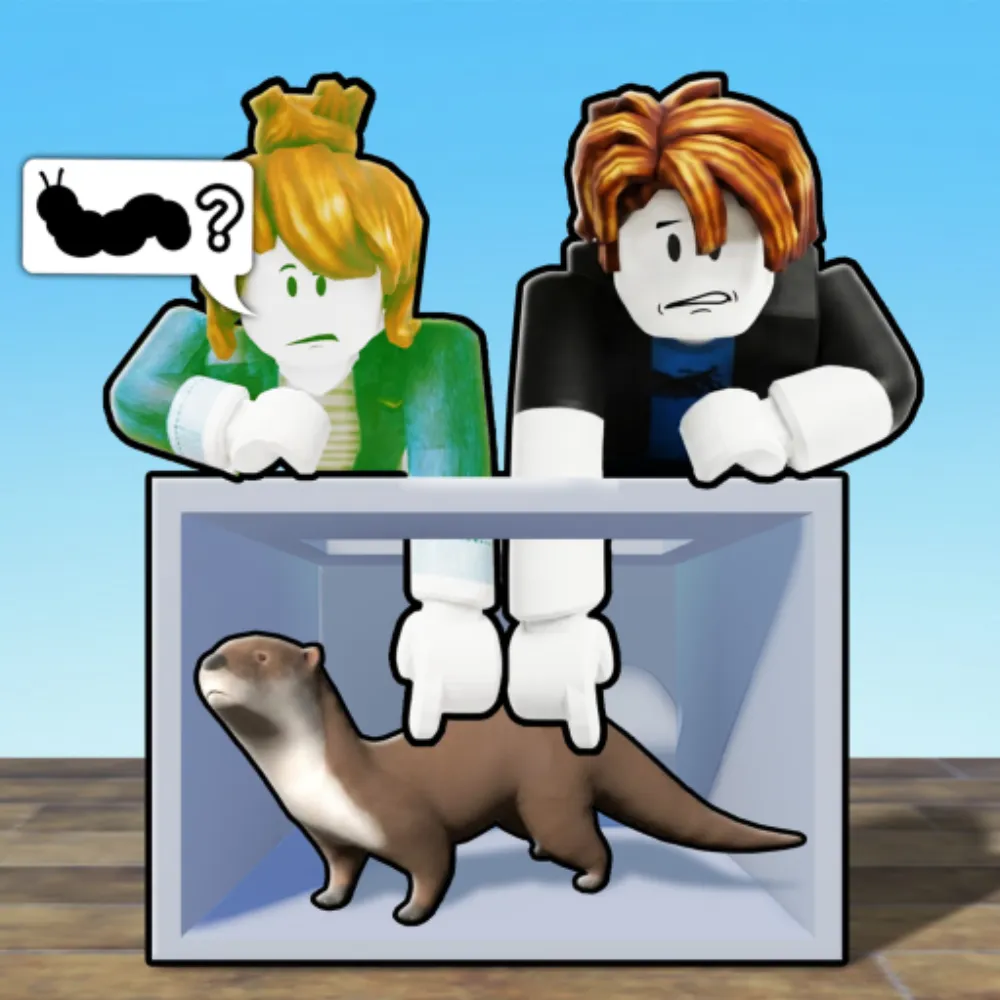
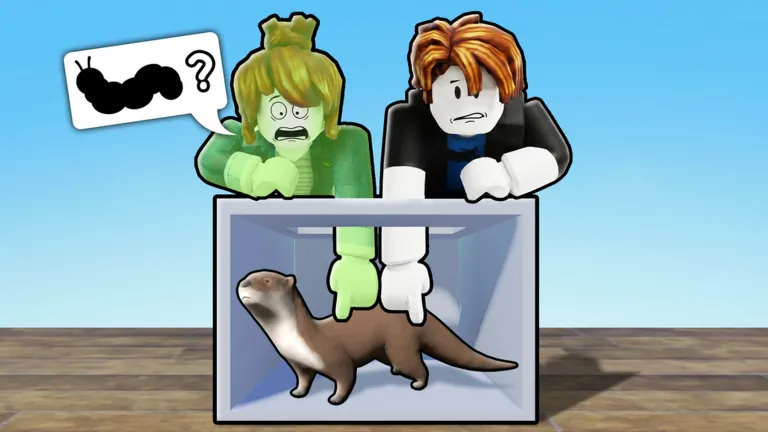
Can You Guess the Animal? is a competitive social party game on Roblox published by the “Guess Animal game” developer group. The official description sets the premise in three lines: “Put your hand in the box… Feel the mystery animal… Can YOU guess what it is?” That description captures the experience precisely, the game presents a hidden creature through restricted visual information and challenges you to name it faster than the other player.
The game is rated Maturity: Minimal by Roblox, making it appropriate for all ages including younger players. Servers accommodate up to 24 players simultaneously, which means there are always active matches to join without waiting. Voice Chat and Camera are both disabled, no audio or video setup is required to start playing.
The most recent update was on 29 May 2026, confirming active development. The game’s jump from launch to 9.1 million visits places it among Roblox’s most engaged new social titles for spring 2026, and server populations remain high across peak hours in June 2026.
The Visual Reveal Mechanic: What You Actually See
Understanding exactly how Can You Guess the Animal Roblox shows you clues is the foundation of improving. The game does not display a full photograph or rendered animal, it presents the creature progressively through deliberately restricted visual information. (It’s the same progressive-reveal tension driving Guess My Game, where the hidden subject is a Roblox game icon instead of a creature, and the Guess My Country Roblox hub covers a 1v1 sudden-death variant where both players race to identify each other’s assigned country, same first-to-commit pressure, applied to world geography instead of animal silhouettes.)
What you typically see:
- Silhouettes and outlines, the animal’s overall body shape, visible as a dark form against a lighter background. Shape alone eliminates hundreds of species: a long neck immediately rules out most mammals, a compact round body and fluffy tail points to a small rodent family.
- Cropped fragments, a section of the animal is revealed: perhaps just the face, the rear leg, or a distinctive marking band. These fragments are chosen to be diagnostic but not immediately obvious, you see enough to identify the animal if you know it well, but not so much that everyone guesses instantly.
- Characteristic patterns, markings, colouration, or texture that are species-specific: stripes, spots, distinctive facial colouring, or unusual anatomical features. A specific ear shape or tail structure can be the deciding detail.
In Normal Mode, the revealed fragment is generous enough that a player with general animal knowledge can identify most animals reliably. In Expert Mode, the crop is tighter, the silhouette more ambiguous, and the species pool draws from less familiar animals that require more specific taxonomy knowledge.
The key insight is that every reveal is designed to have a single correct answer. No animal is chosen that could be confused with another given the clue, but the challenge comes from recognising the distinctive detail under time pressure, before your opponent does.
How to Play Can You Guess the Animal Roblox
The gameplay loop has four stages that repeat across every round:
-
Join a match. Load into the game and you are placed into an active round alongside other players. The game supports up to 24 in a server, so matches begin quickly.
-
Observe the partial clues. A mystery animal is hidden behind a visual obstruction. The game reveals just enough of the animal, a silhouette, a fragment of markings, a characteristic shape, that identification is possible but requires active reasoning. You do not see the full animal at once.
-
Guess the animal. Enter your answer. The player who correctly identifies the animal first wins the round and earns a point toward their streak.
-
Build your win streak. The game tracks consecutive wins. Maintaining a streak is the core competitive measure. Breaking an opponent’s streak or holding your own is what separates casual players from consistent winners.
The game tests both animal knowledge and rapid visual pattern recognition. Knowing what makes a specific animal distinctive, the silhouette of a tapir versus a pig, the ear shape of a fennec fox versus a domestic cat, converts directly into round wins.
Competitive Format: Playing Against 24 Players
Can You Guess the Animal Roblox runs on a large-server format with up to 24 players in each session. This creates a livelier environment than head-to-head-only games, multiple matchups can happen simultaneously, and the room is competitive rather than isolated.
When you enter a round, you are placed opposite another player in a direct guess-off. Whoever identifies the animal first wins that round. The loser of a round may then enter a new matchup against another player in the server. This rotating structure means your performance is public, the server sees who is building streaks and who is losing them.
The social layer is part of the appeal. Pulling off a long streak in front of a full server of 24 players is a visible achievement; getting beaten by a faster guesser in front of the same crowd creates the kind of friction that pushes players to improve. The format rewards both animal knowledge and reaction speed in equal measure.
Because servers are always full at peak times, the matchmaking is essentially instant. You are never waiting more than a few seconds to find an opponent, which keeps the pacing fast and the session engaging. This high-population format also means you encounter a wide range of skill levels, from new players learning basic animals to experienced players with fast pattern recognition and broad taxonomy knowledge.
Normal Mode vs Expert Mode
Can You Guess the Animal? offers two difficulty settings that affect how much visual information the game reveals:
Normal Mode is the default entry point. The partial clues are legible enough that players with general animal knowledge can identify most animals within the time limit. Normal Mode is recommended for new players and younger audiences who are still building their wildlife recognition skills.
Expert Mode reduces the amount of visible information significantly. Silhouettes are more ambiguous, clues are cropped more aggressively, and the species pool may include less common animals that require more specific knowledge. Expert Mode is where win streaks become genuinely meaningful, getting to ten consecutive wins in Expert requires both broad animal knowledge and fast visual processing.
Both modes use the same core mechanic. The difference is purely in how obscured the animal is. Starting in Normal and moving to Expert once you can identify most animals confidently is the standard skill progression path.
How Win Streaks Work
Win streaks are the primary performance metric in Can You Guess the Animal Roblox. The game tracks consecutive victories within your active session, and building a long streak is the clearest signal of skill in the room.
A streak begins when you win your first round against an opponent and continues as long as you keep winning consecutive matchups. Losing a round resets your streak counter back to zero. Because the matchups are public, other players in the server can see who holds a streak, breaking a long streak (your opponent’s or your own) is a social event, not just a mechanical one.
Why streaks matter for your play:
- They create pressure. Once you are on a streak of five or more, faster opponents may be more motivated to guess quickly against you. The pressure to maintain a streak can disrupt your own timing if you let it.
- They benchmark your actual skill. A streak of three or four reflects general animal knowledge. A streak of ten-plus in Normal, or five-plus in Expert, reflects genuine taxonomy fluency and fast pattern recognition.
- They are the natural goal for session progression. In the absence of a persistent progression system, the streak is what you are competing for each session. Players who approach the game with a streak target tend to improve faster because they have a concrete measure of success.
The practical advice: treat every individual round as its own task, not as part of a streak. Players who over-focus on protecting a streak tend to hesitate on uncertain animals rather than committing to a fast guess. A wrong fast guess is worse than a right slow guess, but a right fast guess beats everything.
8 Tips to Win More Rounds
The following tips are drawn from the mechanics covered earlier in this Can You Guess the Animal Roblox guide, apply them from your first session to avoid the most common avoidable losses.
Know your animal taxonomy. The game rewards players who can distinguish between related species. A manatee and a dugong look similar in silhouette; knowing which has a fluke versus a rounded tail is the difference between a correct and an incorrect guess. Spend time reviewing animal families, mammal groups, reptile types, bird shapes, and the distinctive features that separate similar-looking species.
Prioritise the most unique feature. When partial clues appear, identify the single most distinctive element first: an unusual ear shape, a characteristic neck length, a specific pattern. Iconic features like a giraffe’s neck, a peacock’s tail fan, or an elephant’s trunk are identifiable even from a small fragment. Train your eye to spot the unique element rather than trying to process the whole silhouette at once.
Start in Normal and build fluency. Expert Mode can be frustrating before you have pattern recognition for common animals. Spend your first ten to fifteen rounds in Normal to build a mental library of animal silhouettes. Once you can identify most Normal Mode animals in under three seconds, Expert Mode becomes a reasonable challenge rather than a guessing exercise.
Use elimination. If you are not immediately certain, use what the clue rules out. A clue that shows a long, slender tail eliminates cats, bears, and elephants immediately. Narrow from large categories to specific families before committing to a guess.
React fast on the obvious ones. Some animals, elephants, giraffes, penguins, have silhouettes so distinctive that hesitation is the only way to lose those rounds. When you recognise an animal immediately, submit without delay. Seconds matter when the opponent is equally fast.
Study by animal family, not by memorising individuals. Rather than trying to memorise every animal independently, learn the identifying features of each major group. If you know what differentiates mustelids (weasels, otters, badgers) from each other, you handle every member of that family correctly, not just the ones you have seen before in the game.
Watch your pacing against opponents on streaks. When facing a player with a long streak, the temptation is to rush. Faster opponents beat slower ones, but a wrong guess hands the round to your opponent by default. If the clue is ambiguous, take the extra fraction of a second to confirm rather than guessing incorrectly.
Review your wrong guesses. When you lose a round, note what the animal actually was and why you missed it. Most players make the same five to ten mistakes repeatedly, specific animals they confuse with each other, specific family groups they cannot distinguish. Targeting those gaps directly produces faster improvement than general practice.
Common Mistakes Beginners Make
Starting in Expert Mode before building Normal Mode fluency. Expert Mode is designed for players who have already built reliable animal recognition in Normal. Jumping into Expert before you are consistent in Normal makes rounds feel arbitrary, you lose to animals you could not have known, which teaches nothing. Normal Mode is not a beginner lane you need to escape quickly; it is where you build the recognition patterns Expert Mode will test.
Guessing the broad category instead of the specific animal. “Mammal” or “big cat” is not a valid answer, the game requires the specific animal. Beginners sometimes spend their reaction time narrowing to a category rather than going all the way to a species. The habit to build: when a clue appears, push immediately to the specific name, not the group.
Ignoring the silhouette’s proportions. Players who focus only on surface markings (colour, pattern) often miss the most diagnostic information, which is body proportion. The ratio of leg length to body size, the proportion of the tail to the torso, and the size of the head relative to the body are all reliable identifiers that markings can obscure but silhouettes cannot.
Letting streak pressure disrupt normal timing. Once players accumulate a streak, they often change their guessing behaviour, either over-cautiously waiting to be certain, or recklessly fast to maintain momentum. Both patterns are worse than normal play. The streak is a measurement, not a strategy. Play each round independently.
Playing passively without targeting improvement. The game is easy to play reflexively, join, guess, join again, without actively improving. Players who treat each session as practice (noting which animals they miss, which families they struggle with) improve markedly faster than those who treat it as pure entertainment. The game is short-session enough that even ten focused rounds builds measurable recognition skill.
Are There Codes for Can You Guess the Animal Roblox?
There are no promo codes for Can You Guess the Animal? on Roblox as of June 2026. The game does not include a code-redemption system. Unlike progression-based Roblox games that distribute codes for in-game currency or items, Can You Guess the Animal? is a pure party game with no persistent resource economy, there is nothing to unlock through a code.
If the developer introduces a code system in a future update, this page will be updated to reflect it. Any website claiming to offer working codes for this game as of June 2026 is inaccurate.
Frequently Asked Questions
Is Can You Guess the Animal? free to play on Roblox?
Yes. The game is free. No Robux purchase is required to access any part of the core gameplay.
How many players are in each server?
Servers hold up to 24 players. The larger server format creates an active, social environment with multiple concurrent matchups happening at once.
What age group is the game suitable for?
The game carries a Maturity: Minimal rating from Roblox, making it appropriate for players of all ages. The concept, identifying animals, is non-violent and broadly accessible.
Why do I only see part of the animal?
The visual obstruction is the game’s core mechanic. You are meant to identify the animal from partial information, not a complete view. Expert Mode reduces visible information further compared to Normal Mode.
Does the game have voice chat?
No. Voice Chat and Camera features are both unsupported according to the Roblox game page. Communication uses the standard Roblox text chat.
When was Can You Guess the Animal last updated?
The most recent update was on 29 May 2026. Active development is ongoing.
Who developed Can You Guess the Animal?
The game was developed by the “Guess Animal game” group on Roblox. The developer also maintains the game’s Roblox page at the official URL linked above.
What is the difference between Normal Mode and Expert Mode difficulty?
Normal Mode reveals more of the animal, the partial clue is generous enough for general animal knowledge to work reliably. Expert Mode crops the clue more aggressively, uses more ambiguous silhouettes, and may draw from a broader pool of less familiar species. The core mechanic is identical; only the information available to you changes.
Can I play Can You Guess the Animal Roblox on mobile?
Yes. The game runs on Roblox, which is available on iOS and Android as well as PC and console. Because the game uses text input for guesses, mobile players will use the on-screen keyboard. Text input speed on mobile is slower than keyboard typing, which is worth noting for competitive play in Expert Mode.
Is there a way to practice identifying animals before playing?
The game itself is the most efficient practice. Starting in Normal Mode and playing consecutive rounds builds recognition faster than offline study alone, because you get immediate feedback on whether your identification was correct. You can supplement with offline animal family study, reviewing what makes each animal group visually distinct, to accelerate the process, but there is no in-game practice mode separate from live play.
For a Roblox visual puzzle in the same perceptual-identification category, Between Colors challenges players to sort shuffled gradient tiles into a smooth color sequence, a different skill set but the same spatial sharpness. For a competitive book-sorting cleanup race in the same Spring 2026 casual Roblox wave, Clean the Library guide covers the scavenger-hunt cleanup where players sort thousands of scattered books back onto shelves faster than server rivals, same pick-up-and-play energy, library instead of animals. For an animal-themed Roblox sim that swaps recognition for care, naming, feeding, and treating animals as a vet, the Animal Hospital hub covers the care-loop entry in the same animal-on-Roblox category. For guides, updates, and all related content for this game in one place, see the Can You Guess the Animal game hub.
![[CURSED] Anime Astral Simulator Tier List cover](/article-covers/anime-astral-simulator-tier-list.webp)