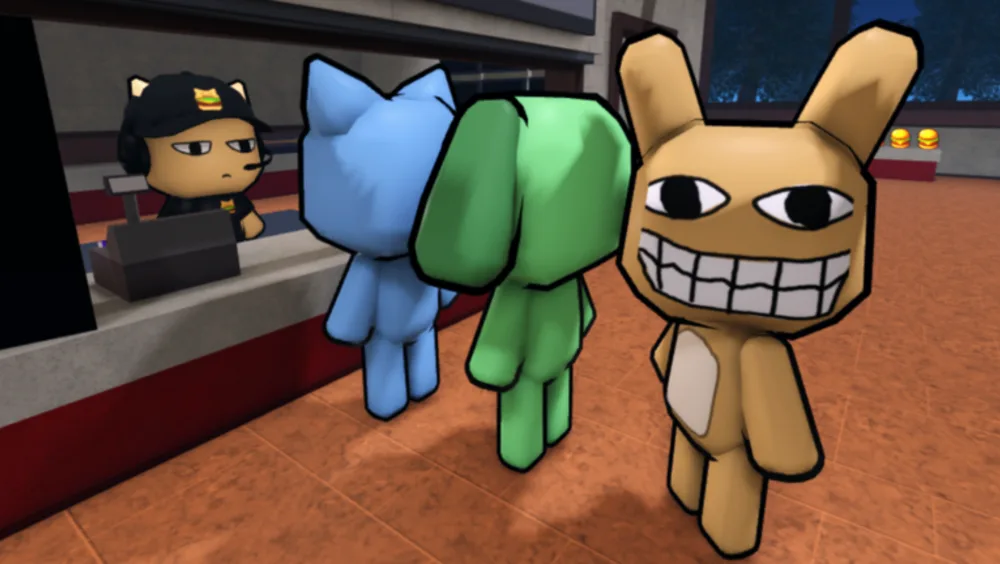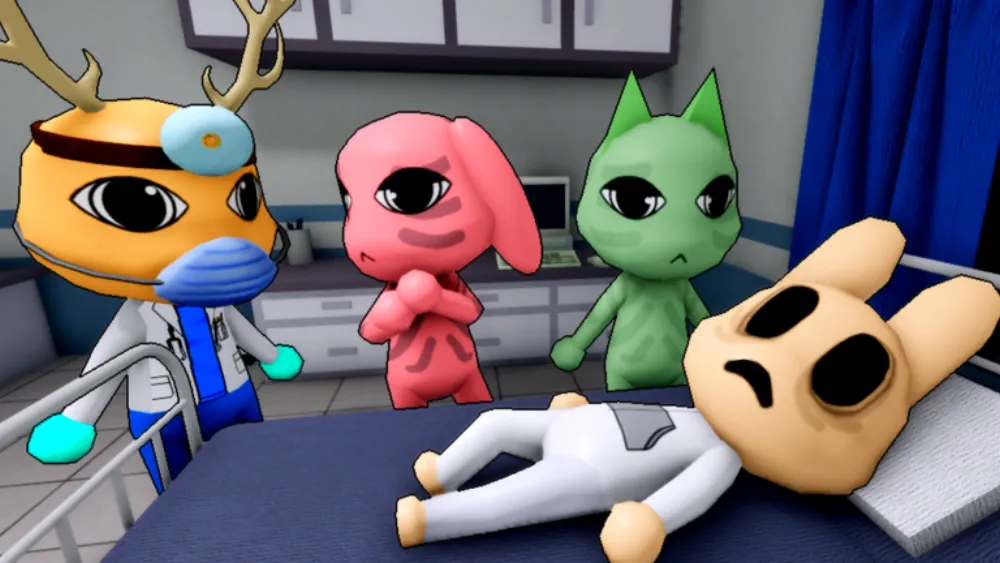
Animal Hospital Roblox is a co-op survival horror game made by the group Animal Anomaly. It came out on 10 May 2026, and in under seven weeks it has logged 64.5 million visits, 269,187 favourites, and hit a peak of 160,442 players at once. Right now about 140,000 people play it at the same time, and it holds a 95.8% positive rating. That puts it in the top 15 most-played games on all of Roblox. The setup is simple: you take a night shift job at an animal hospital, and some of the patients walking up to the front desk are not what they seem. For every guide we have on the game, including update notes, new-anomaly write-ups, and difficulty tiers, check the Animal Hospital game hub.
What Is Animal Hospital Roblox?
Animal Hospital Roblox mixes two things you rarely see together. One is the daily grind of hospital work: check patients in, send them to rooms, and give them treatment. The other is the jump-scare tension of games like FNAF and the Mimic genre. You are not only hunting monsters. You are also working out which patients are secretly wrong in one of 14+ ways, while still treating the real ones the right way.
Up to 30 players per server can play Animal Hospital Roblox at once. Most servers end up split between people staffing the front desk and people running the treatment rooms.
Animal Hospital Roblox Stats (as of 24 June 2026)
All figures below come from the Roblox API (universe ID 10148749921, place ID 78515283254292):
| Stat | Value |
|---|---|
| Total visits | 64,546,848 |
| Favourites | 269,187 |
| Peak concurrent | 160,442 |
| Current concurrent | ~140,107 |
| Rating | 95.8% positive |
| Upvotes / Downvotes | 79,984 / 3,467 |
| Max players per server | 30 |
| Created | May 10, 2026 |
| Last updated | June 23, 2026 |
| Developer | Animal Anomaly (Group) |
| Price | Free to play |
| Global rank | #11 (Bloxodes) |
64.5 million visits in 45 days with a 95.8% rating is a big deal even for Roblox. The 269K favourites number matters more than raw visits, because a favourite is an active save. It tells you a lot of players keep coming back.
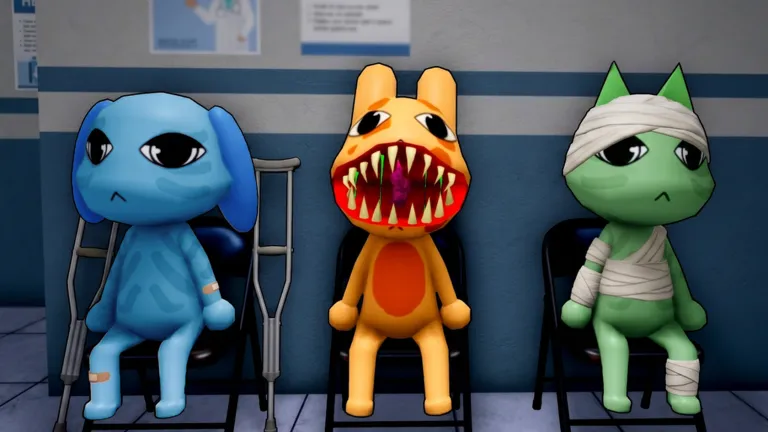
The Animal Hospital Roblox Night Shift: How It Works
Every session in Animal Hospital Roblox is a shift. You show up at the clinic, take a spot at the front desk or a treatment room, and start handling patients as they arrive. The one question never changes when a new animal walks through the door: is this a real patient, or is something wrong with it?
Real patients need treatment. They act normal, they look like plain animals, and once you send them to the right room they finish their care. Anomalies are creatures that have dressed up as patients, but they carry tells. A tell is a small or obvious sign that something is off, and you have to catch it before the thing gets inside.
Miss a real anomaly and it enters the building, where it causes bigger and bigger problems. Turn away a real patient by mistake and you lose cash, and depending on the server rules it can hurt the run.
How to Spot Anomalies: The Three-Check System
Animal Hospital Roblox uses a three-layer check at the front desk. No single check catches everything on its own. Some anomalies only show up on camera, some only in person, and some only in a photo.
Look at them in person. This is the easy layer. Stand near the animal and watch it up close. In-person tells include extra eyes, red eyes, hollow spots in the face, twitching limbs, a creepy grin, and teeth that are too sharp or just wrong. A normal animal shows none of that.
Take a photo. Snap a picture with the in-game camera. Some anomalies look fine in person but come out wrong in the photo: features that do not match the real animal, static, or bloodshot eyes you can only see through the lens. Normal patients photograph normally.
Check the cameras. Look at the CCTV feeds near the entrance. An anomaly that passed the first two checks can still slip up here, with black boxes over its eyes, a locked stare at the camera, or stretched-out limbs you cannot see in person. If a patient looks fine on all three checks, it is almost surely real.
If all three come back clean, let the patient in and send them to the right room. If any check shows a tell, hit the Shutter button at the desk. That closes the front shutter and the anomaly leaves.
The Eight Animal Hospital Roblox Treatment Rooms
Treatment rooms are where real Animal Hospital Roblox patients get care. Each room has its own job. Most treatment deaths come from players who send an animal to the wrong room, rush the steps, or start a task before they know how it works.
Rooms 1 to 5, DNA Analysis: these are the go-to rooms for most patients early in a shift. Run the DNA terminal, which does a sequence-matching check on the patient. It is timed but not hard. The main way to fail is letting a patient wait too long before you start.
Room 6, X-Ray Room: finish a sequence mini-game on the X-ray panel, then give the patient the right items based on what the X-ray shows. Read the result before you act. Rushing the items on the wrong result makes the treatment fail.
Room 7, Heart Monitor Room: watch the heart reading and click white icons while you avoid skull icons as they pop up. You want to hit 100% heart stability. Clicking a skull sets you back some. This room favors players who have seen it before, because the white and skull icons spawn in a rhythm.
Room 8, Surgery Room: a timed surgery. It has the shortest window of any room and the harshest penalty for a slip or delay. Put your most experienced players here if you can, or keep someone ready to jump in when the surgeon is busy.
Sanity: the Hidden Animal Hospital Roblox Resource
Sanity is the resource you manage all shift long in Animal Hospital Roblox. Unlike cash or patient count, it has no set refill timer. You have to go get it back yourself.
Sanity drops when you look right at certain anomalies, get close to the enemy creatures, or hit specific events in the building. Low Sanity warps the screen and adds audio that makes your checks harder to trust. It is a nasty loop: the scarier things get, the harder they are to handle.
How to get it back: buy Coffee or food from the in-game shop on the hospital floor. Those are your main tools. Do not let Sanity run low before a tricky moment, because the ambulance event (covered below) is brutal to handle when your Sanity is already shot.
Special Animal Hospital Roblox Characters and Events
Barney: an anomaly who comes to the desk not for care but to ask you for a coffee favour. Your answer branches the interaction. Refusing the right way flags him as an anomaly, while going along with it counts as letting a non-patient in. Barney looks distinct enough to spot, but you have to know the pattern first.
Bonnie: a special character with a branching quest that has two different endings based on your choices. Bonnie is not a normal anomaly. The whole thing is story-driven and needs real decisions. Servers that finish the questline right unlock one of the two outcomes.
Bed Monster: a large black rabbit-shaped thing that shows up in some rooms. Staring at it drains Sanity fast. If you run into it, do not look. Turn away, back out of the room, and warn your teammates.
Ceiling Entity: a mass of eyes and flesh that clings to some ceilings. Like the Bed Monster, eye contact does quick Sanity damage. Looking up near a spot where it might be is always a risk.
The Ambulance Event: this kicks in after Shift 4. Instead of one animal at a time, several patients show up at once. The desk turns into triage, and you have to run all three checks on each arrival in parallel without losing track of who you have cleared. This is the hardest part of a normal run in Animal Hospital Roblox, and where most late deaths happen.
Animal Hospital Roblox Tips for Your First Shift
Learn what normal looks like first. You cannot spot the odd ones until you know the baseline. Spend your first few arrivals watching a confirmed-normal patient at each check stage. Once you have seen enough normal animals, the tells jump out at you.
Do not skip the photo and camera checks. In-person looks miss whole anomaly types that only show in a photo or on camera. All three checks add maybe 30 to 60 seconds per patient, but they catch things an in-person glance never would. Skipping a layer is the most common mistake new Animal Hospital Roblox players make.
Assign rooms before the shift starts. With a good group, deciding who covers which room up front cuts way down on mid-shift scramble. Room 8 Surgery is the one you most want a dedicated person on.
Stock Coffee before the Ambulance Event. After Shift 4, load up on Sanity items before the crowd hits. Walking into a multi-patient rush on low Sanity is very hard to come back from.
Does Animal Hospital Roblox have codes? No. Animal Anomaly has not added a code system as of June 2026. The official Roblox game page pins no codes, and several well-known community code trackers say the same. We will update this page if codes ever show up.
Why Animal Hospital Roblox Is One of the Platform’s Biggest Games Right Now
Co-op hospital roleplay mixed with anomaly horror is not a common combo on Roblox, and Animal Anomaly nailed both halves. The three-check loop is easy to pick up but stays interesting for a long time, because there are enough anomaly types that you keep meeting new ones. The treatment rooms add real variety on top of the detection, so you are doing hospital work between scares instead of just waiting for the next one.
64.5 million visits in 45 days, backed by a 95.8% rating from nearly 84,000 votes, says Animal Hospital Roblox is clicking with players at a rare scale. A 160K peak concurrent is the kind of number you usually only see on games that have been around for years.
More to read: the +1 Backflip Obby Escape guide and the Trade Squishy Dumplings guide cover two other June 2026 breakout Roblox hits. For Roblox horror in a one-versus-many format, where eight survivors have to outlast a player-controlled Entity until 14:00 in a Dead by Daylight style match, the PWNed BY 14:00 guide by Waffle Office taps the same digital-horror crowd that gives Animal Hospital Roblox its tension. For another co-op game built on split roles, the Monobombo guide covers the 7,500+ CCU three-monkey bomb-defusal puzzle where one player cannot see, one cannot hear, and one cannot speak, which asks for the same wordless teamwork a smooth shift needs; the Monobombo game hub gathers all coverage for that game. For codes on the big Roblox games, the full index sits at /intents/codes. For every Roblox guide on the site, see /platforms/roblox.
![[CURSED] Anime Astral Simulator Tier List cover](/article-covers/anime-astral-simulator-tier-list.webp)