Trade Squishy Dumplings is a Roblox collectible trading game by SGR Studios. It came out on 24 May 2026. In its first month the game hit 18.9 million visits, 57,710 favourites, and 10,861 players online at once, with a 97.5% positive rating. That is the highest score among the squishy dumpling games that launched in spring 2026. The whole game is built on one idea: collect squishy dumplings and swap them with other players to climb the rarity ladder. This guide covers how trading works, what makes some dumplings worth more, and the mistakes to skip when you start.
What Is Trade Squishy Dumplings?
Trade Squishy Dumplings is a social collecting and trading game. The thing you collect is squishy dumpling toys: soft, round figures based on the real squishy toy trend from the mid-2020s. SGR Studios built the whole game around player-to-player swaps. There is no auction house, no shop for rare items, and no auto-sell. Every deal happens when one player starts a trade with another.
The game’s own description says it in one line: “Some Dumplings are More Rarer Than Others.” That gap is what makes each trade matter. A common dumpling and a rare one both look like little toys, but the game gives them very different values based on how hard they are to get. The whole Trade Squishy Dumplings trading scene runs on that gap, and on using it to upgrade your collection.
How Trading Works in Trade Squishy Dumplings
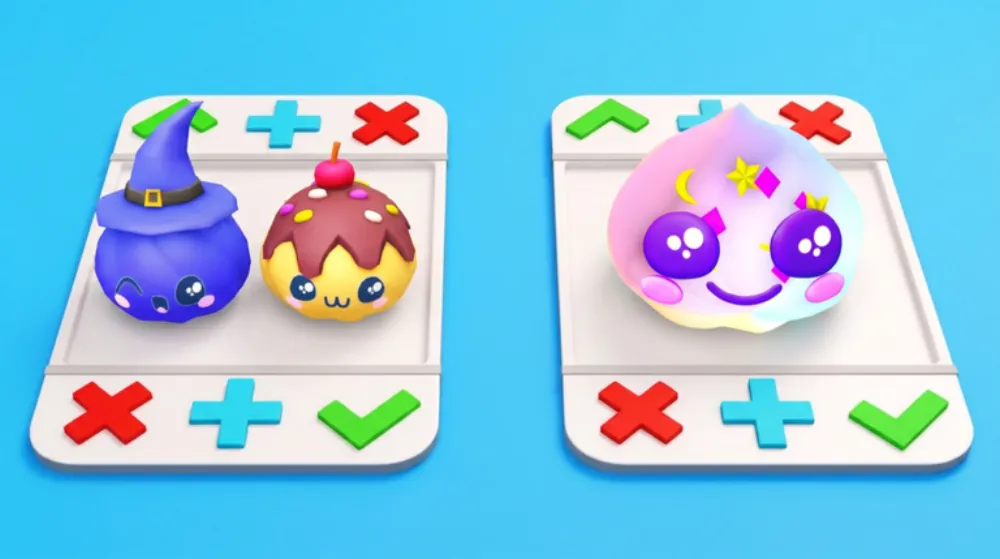
Trading in Trade Squishy Dumplings uses a physical spot, not a menu. You walk your character onto a trading board and meet another player who stands on the same board. SGR Studios lays out the steps right in the game:
- Stand on a trading board with someone else. Boards are the fixed spots where swaps happen. Both players have to stand on the same one.
- Both drop the items you want to trade. Each player puts their offer into the trade slots. You can look at what the other person is offering before you agree.
- Both step on the ✅ button at the same time to accept. The swap only goes through when both players confirm together. If one backs out, nothing happens.
- Step on ❌ to cancel. Either player can back out any time before both accept.
- Step on ➕ to ask for more. If you want the other player to add to their offer first, the ➕ button sends that signal.
The “confirm at the same time” rule is the key thing to learn early in Trade Squishy Dumplings. In menu trades, one player clicks first and the other clicks later. Here, both of you need to be ready in the same moment. Make a habit of checking that your partner is on the board and set before you move to confirm.
Why Some Dumplings Are Worth More
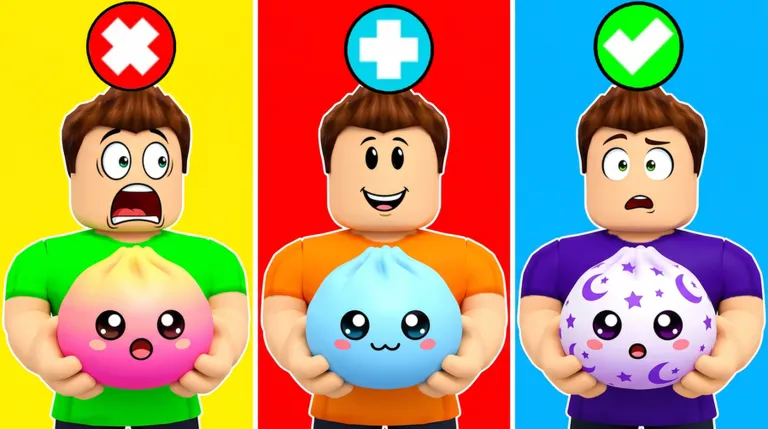
The first question new Trade Squishy Dumplings players ask is: why is my dumpling worth nothing in trades? The answer is rarity, and it drives everything. The game uses tiers, and the further a dumpling sits from common, the more people will give up to get it.
Common dumplings are the ones everyone picks up by default. They are your starting stuff, your fillers, the baseline. A common has almost no trade value because every other player already has a pile of them. Offering one usually reads as filler to round out a deal.
Uncommon and Rare dumplings are harder to get, so they draw real interest. If you hold a rare, you can expect several lower pieces back. Often that means two or three uncommons for one rare, or a mix of currency and smaller pieces.
Ultra-Rare and Secret dumplings are the grail items at the top of the market. They are hard to pull and truly scarce across the servers. One ultra-rare can pull in many rares in return.
Mutations: the Hidden Value Multiplier
The biggest surprise for new Trade Squishy Dumplings players is mutations. A mutated dumpling is a version of a normal one that is far rarer than the base. Think of it like a holographic card in a real card game. A mutation can lift a dumpling’s trade value by several tiers.
So here is the tip: check if a dumpling you get is mutated before you trade it away. The marker is easy to miss, mostly when you are busy talking a deal and working the board at the same time. A mutated common beats a plain uncommon in most active trading groups. A mutated rare can sit in the same range as a plain ultra-rare.
Mutations look different from normal ones. They have a new colour, glow, or pattern based on the mutation type. Once you know what to watch for, spotting them gets easy.
How to Not Get Ripped Off in Trades
The biggest mistake new Trade Squishy Dumplings players make is accepting deals without knowing the rarity gap. Here are the common cases and how to handle them:
“I got offered a bunch of commons for my rare. Should I take it?” No. More items do not make up for a rarity gap. Five commons are worth less than one rare in almost every group, because commons are everywhere and the rare is not. Anyone piling commons onto a rare is banking on a new player who has not learned the gap yet.
“Someone offered me a dumpling I have never seen. Is it worth anything?” Maybe. Dumplings you do not know are often the ones other players are hunting. Before you give away something you know is good for something strange, step off the board and ask another player what the item is worth.
“Why won’t anyone trade for my dumplings?” This is almost always a rarity problem. If you hold only common-tier pieces, no one has a reason to trade, since they have plenty of commons too. The way out is to bundle up: trade stacks of commons to players who need them for their collection, or find people who just like the look of a common you own (not every trade is about value). Then save toward one uncommon and trade up from there.
Trading Strategy for New Players
Trade stacks of the same common for one uncommon. That common-to-uncommon tier is the busiest market and the easiest place to find willing partners. Your first uncommon opens the door to the mid-range Trade Squishy Dumplings market.
Use the ➕ button. If an offer is close but not quite right, asking for more is the normal move, not walking away. Most players take a counter well, since they want the trade to close too.
Trade where the crowd is. More players on more boards means more choices and faster deals. If you are stuck, move to the biggest cluster of players and repeat your offers there.
Learn the rarity list before you hit the boards. The rarest items are obvious once you know the system. The middle tiers are where the value gaps get subtle. Learn which dumpling sits at which tier so you do not hand off a mid-rare for something a step below.
Is There a Code System in Trade Squishy Dumplings?
No. As of 24 June 2026, Trade Squishy Dumplings has not put out a public code system. Given how big it is (18.9 million visits in a month), codes could show up in a future update. This page will update when any code drops. For codes on other active Roblox games, see Anime Fighting Simulator codes, Axe RNG codes, Grow a Garden codes, and Slime RNG codes.
Trade Squishy Dumplings vs Other Squishy Games
The spring 2026 Roblox wave gave us a big cluster of squishy dumpling games, and players keep landing on the guide for the wrong one. Here is how this game differs from its closest neighbours:
- My Squishy Dumplings guide: a case-hatching idle tycoon by Crazay Games. You hatch dumplings from cases and set them on your island for passive income. No trading board, and the loop is purely idle.
- Steal a Squishy Dumpling Roblox: a stealth tycoon by Another Game Now. You steal dumplings from sleeping NPCs instead of trading with players, so the mechanic is totally different.
- Squishy Dumpling Duel guide: a 1v1 party game where you find the glitter dumpling in nine boxes. No trading here.
- 2 Player Squishy Tycoon guide: a co-op base-building tycoon by Cats Drink Soup. No dumpling trading.
Trade Squishy Dumplings is the one built around the player-to-player trade board. If you came looking for something other than boards and a rarity-based economy, one of the links above is probably the game you want.
Stats verified: 24 June 2026. Roblox API (universe ID 10217234318).
![[CURSED] Anime Astral Simulator Tier List cover](/article-covers/anime-astral-simulator-tier-list.webp)